
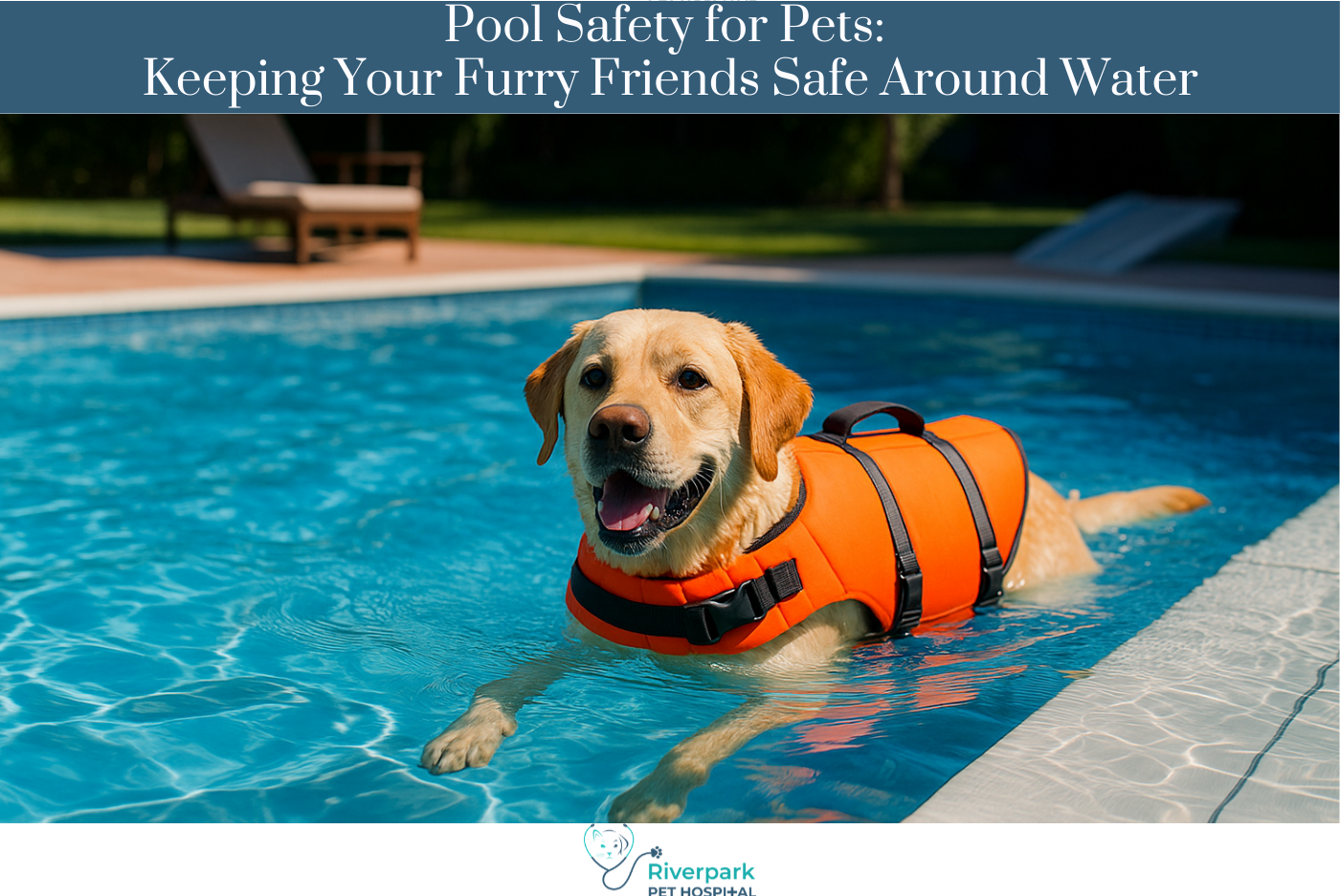
As summer temperatures rise in Fresno, many families cool off by spending time around the pool. While a backyard pool can be a source of fun, it also poses hidden risks for dogs and even cats. Just like children, pets need extra supervision and safety measures around water. At Riverpark Pet Hospital, we want to help you keep your pets safe while you enjoy poolside fun.
Why Pool Safety Matters for Pets
- Unexpected Accidents: Even strong swimmers can get tired or panic if they can’t find a way out of the pool.
- Not All Pets Swim Naturally: Breeds with short snouts (like Bulldogs or Pugs) or heavy builds may struggle in water.
- Chemical Exposure: Chlorine and pool chemicals can irritate your pet’s eyes, skin, and digestive system if ingested.
- Heat Risks: Pets left outside in the sun may overheat quickly, especially on pool decks that radiate heat.
Tips for Pool Safety
- Teach Pets to Exit Safely
Show your dog where the pool steps or ramps are, and practice getting out together. - Use Pet Life Jackets
For small breeds, older pets, or those with limited swimming ability, a properly fitted life jacket is a must. - Never Leave Pets Unattended
Just like children, pets should not be left alone near water. - Provide Fresh Drinking Water
Keep a water bowl nearby so pets don’t try to drink from the pool. - Rinse After Swimming
Always rinse off chlorine or saltwater to protect your pet’s coat and skin.
Q&A: Common Pool Safety Concerns
Q: Can chlorine harm my pet?
A: Small amounts of pool water usually won’t cause serious harm, but drinking too much can upset your pet’s stomach and irritate their throat. Always provide fresh water.
Q: My dog doesn’t like swimming. Should I force them?
A: No. Never force a pet into the pool. Some animals simply don’t enjoy water, and pushing them can create fear or accidents.
Q: Are cats at risk around pools?
A: Yes. While many cats avoid water, accidents can happen if a cat falls in and can’t climb out. Pool covers and fences add extra protection.
Q: How can I tell if my pet has swallowed too much pool water?
A: Watch for coughing, drooling, vomiting, or lethargy. If symptoms persist, contact a veterinarian right away.
Q: Is swimming good exercise for dogs?
A: Yes! Swimming is an excellent low-impact activity, especially for senior pets or those with joint problems. Just make sure they are comfortable in the water and supervised at all times.
Final Thoughts
Poolside fun is safer when everyone—including pets—can enjoy it responsibly. Taking a few preventive steps helps ensure your furry family members stay healthy and happy all summer long.
Contact Riverpark Pet Hospital
For advice on pet safety or if you suspect your pet has had a pool-related accident, contact us right away:
Riverpark Pet Hospital
📍 9433 N Fort Washington Rd #101
Fresno, CA 93730 (Opposite Woodward Park)
📞 Phone: (559) 712-7387
Your pet’s health and safety are always our top priority.