
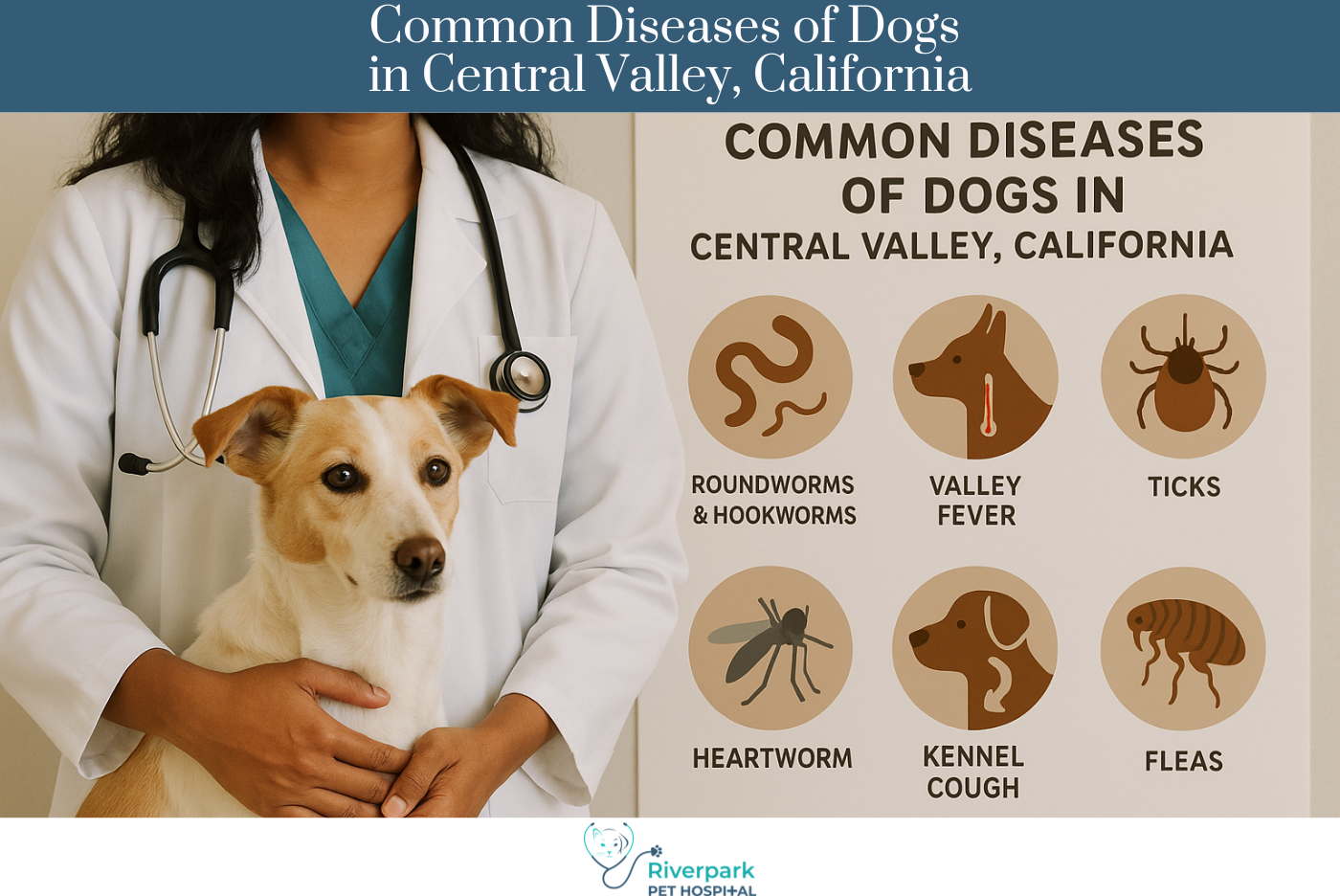
Living in California’s Central Valley offers dogs warm sunshine, open spaces, and an active outdoor lifestyle. However, the region’s unique climate and environment also put pets at risk for certain health conditions. At Riverpark Pet Hospital in Fresno, we believe prevention and early detection are key to keeping your furry family members healthy.
Below, we’ll review some of the most common diseases affecting dogs in the Central Valley and share how you can protect your pet.
Common Canine Diseases in the Central Valley
1. Valley Fever (Coccidioidomycosis)
- Cause: A fungal infection found in the soil, especially during dry, dusty seasons.
- Symptoms: Coughing, lethargy, fever, weight loss, lameness, or non-healing skin lesions.
- Risk: Dogs that dig, hike, or spend time in dusty outdoor areas are at higher risk.
2. Parvovirus
- Cause: A highly contagious viral infection spread through contaminated soil, feces, or contact with infected dogs.
- Symptoms: Severe vomiting, diarrhea (often bloody), dehydration, and loss of appetite.
- Prevention: Vaccination is the best protection.
3. Heartworm Disease
- Cause: Spread by infected mosquito bites.
- Symptoms: Coughing, fatigue, weight loss, and in severe cases, heart failure.
- Prevention: Monthly heartworm preventatives prescribed by your veterinarian.
4. Tick-Borne Diseases (Ehrlichiosis, Anaplasmosis, Lyme Disease)
- Cause: Transmitted by ticks found in grassy and wooded areas.
- Symptoms: Fever, joint pain, swollen lymph nodes, loss of appetite, lethargy.
- Prevention: Regular tick prevention medication and tick checks after outdoor activities.
5. Leptospirosis
- Cause: A bacterial infection spread through contaminated water or soil (often from wildlife urine).
- Symptoms: Fever, vomiting, diarrhea, muscle pain, jaundice, and kidney or liver damage.
- Prevention: Vaccination is recommended, especially for outdoor dogs.
6. Heat-Related Illness (Heat Stroke & Dehydration)
- Cause: Central Valley summers can bring triple-digit heat, putting dogs at risk.
- Symptoms: Excessive panting, drooling, lethargy, vomiting, collapse.
- Prevention: Provide shade, water, avoid mid-day walks, and never leave dogs in cars.
Q&A: Dog Health in Central Valley
Q: How can I protect my dog from Valley Fever?
A: While there is no vaccine, you can minimize risk by avoiding digging in dusty soil and keeping your pet indoors during windy days. If your dog shows persistent coughing or lameness, schedule a vet visit immediately.
Q: Is parvovirus still common in Fresno?
A: Yes. Parvovirus remains a major concern in Central Valley communities. Puppies and unvaccinated dogs are especially vulnerable. Keeping your pet up to date on vaccines is essential.
Q: When should I start heartworm prevention?
A: Puppies should begin prevention as early as 8 weeks old. Since mosquitoes are present in the Central Valley much of the year, year-round prevention is strongly advised.
Q: Are tick-borne diseases a problem in Fresno?
A: Yes. With outdoor recreation areas like Woodward Park nearby, ticks can easily attach to dogs. Use a monthly flea and tick preventative and check your pet’s fur after walks.
Q: What are signs of heat stroke in dogs?
A: Watch for rapid panting, drooling, bright red gums, vomiting, or weakness. Heat stroke is a medical emergency—cool your pet gradually and bring them to Riverpark Pet Hospital immediately.
Q: Should my dog be vaccinated for leptospirosis?
A: Yes, especially if your dog hikes, swims, or has contact with wildlife areas. Our veterinarians can recommend the right vaccination schedule for your pet.
Final Thoughts
Dogs in the Central Valley face unique health challenges, but with proper vaccination, parasite prevention, and routine veterinary checkups, most diseases can be prevented or managed.
At Riverpark Pet Hospital, we provide comprehensive care to help keep your pets safe, healthy, and happy all year long.
📍 Riverpark Pet Hospital
9433 N Fort Washington Rd #101
Fresno, CA 93730
(Opposite Woodward Park)
📞 Phone: (559) 712-7387