
4 min read · July 1, 2024
Updated October 23, 2026
A microchip that was never registered is a number that leads nowhere. Most microchipping awareness messages stop at "get your pet chipped," yet the chip only stores an ID number. Your microchip registration, the record that ties that number to your phone and address, is what brings a lost dog or cat home.
The difference shows up in shelter data. In one study of microchipped animals entering shelters, only 58.1 percent of the chips that shelters checked with a registry were registered at all. Keeping a chip useful takes a few minutes a year.
Why Microchipping Awareness Matters After the Chip Is Placed
Microchipping awareness matters after the chip is placed because the registry record, not the implant, is where most failures happen. The American Veterinary Medical Association (AVMA) reports that in a shelter study, microchipped dogs were returned to their owners 52.2 percent of the time, compared with 21.9 percent for dogs without chips, and microchipped cats 38.5 percent of the time, compared with 1.8 percent.
Return rates could be higher. Among 876 microchipped animals in the same study whose owners could not be found, the main reasons were an incorrect or disconnected phone number (35.4 percent), an owner who did not return calls or answer a letter (24.3 percent), and a chip registered to another group (17.2 percent).
For the basics of the chip itself, the appointment and the safety data, see our guide to how pet microchipping works.
How Microchip Registration Works and How to Confirm Yours
Microchip registration links your pet's chip number to your contact details in a registry database, and you can confirm yours in two steps: find the chip number, then look up which registry holds it. The AVMA explains that a chip contains only a unique identification number and needs to be registered with the microchip manufacturer or a registry before it can connect a finder to you.
Start with the number, which appears on adoption paperwork or a registration certificate. If you cannot find it, a veterinary team can scan your pet and read it to you.
Next, identify the registry. The American Animal Hospital Association runs a free Microchip Registry Lookup Tool where you enter the chip number and receive a list of the registries that hold a record for it. The tool does not show owner details and cannot be used to edit them, so the last step is to log in to, or call, the registry named in the results and check what is on file.
If your dog or cat came from a shelter, a rescue or a previous owner, confirm that you are listed as the primary contact.
When to Update Your Microchip Contact Details
Update your microchip contact details any time the phone number, address or person a shelter would need to reach changes. The AVMA advises owners to update the registry as soon as possible, paying particular attention to the phone number and address. These are the moments that most often leave a record out of date:
- A move: Change your address before moving day, since pets can slip out through doors left open during packing.
- A new phone number: A disconnected number was the single most common reason a chipped pet could not be returned.
- A new owner: When a pet is adopted, rehomed or inherited, the registration needs to be transferred into the new owner's name.
- A registry that shuts down: AAHA notes that one registry, Save This Life, has ceased operations, so owners registered there may need to register again elsewhere.
Why an Annual Chip Scan Belongs in Every Wellness Visit
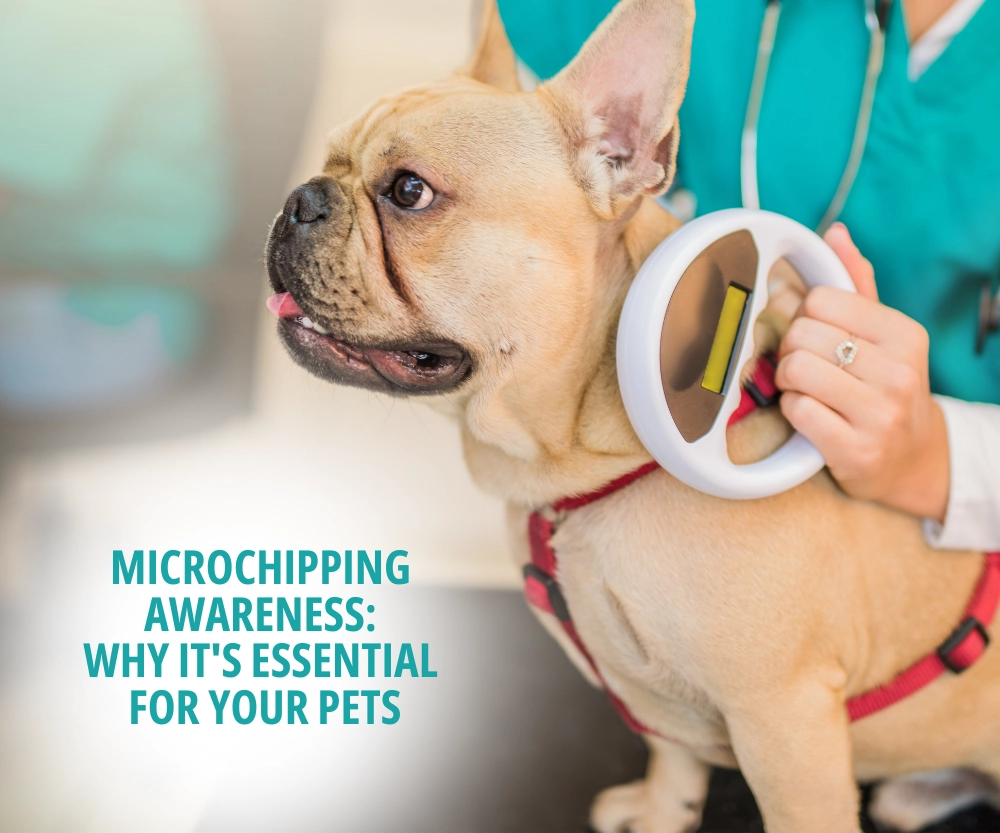
An annual chip scan confirms that the microchip is still present, still readable and still where a scanner would look for it. The AVMA recommends asking your veterinarian to scan your pet's microchip at least once a year, and the easiest time is during your pet's regular wellness exam.
Chips are designed to last for a pet's lifetime, but they are not flawless. The AVMA lists migration, in which the chip moves away from where it was placed, as the most frequently reported issue, and chip failure as an uncommon one. A scan takes seconds and catches either problem early.
Compare the number the scanner shows with the number on your registration. Riverpark Pet Hospital offers free chip scans and can help you get a chip activated through our microchipping service.
What to Do If Your Microchipped Pet Goes Missing
If your microchipped pet goes missing, check the registry record first, because a shelter may scan your pet within hours.
- Confirm your registry details: Log in or call the registry right away and make sure your phone number and address are correct. Ask whether the registry lets you flag the pet as lost.
- Answer unknown numbers: A shelter or clinic will probably call from a number you do not recognize.
- Contact local shelters, animal control and nearby clinics: According to the AVMA, scanning for a microchip is one of the first things these teams do when a found animal arrives. Give them your pet's description and chip number.
- Search in person: A chip does not show location, so walking the neighborhood and talking with neighbors still matter.
What National Check the Chip Day Asks Pet Owners to Do
National Check the Chip Day falls on August 15 each year and asks pet owners to review their microchip records. The AVMA and the American Animal Hospital Association created Check the Chip Day together as a reminder built around three actions:
- Get the chip: If your pet has no microchip, schedule a visit, then register the chip promptly.
- Get it scanned: Ask your veterinarian to scan the chip at each annual wellness exam.
- Review the record: Each August 15, correct anything in the registration that is incomplete or outdated.
Frequently Asked Questions About Microchip Registration
Do I need to update my pet's microchip after I move?
Your pet's microchip registration needs to be updated after you move, because the registry is the only place your new address and phone number are stored. The chip itself holds only an ID number and does not change.
How do I find out which registry my pet's microchip is registered with?
The registry your pet's microchip is registered with can be found by entering the chip number in the AAHA Microchip Registry Lookup Tool, which lists the registries holding a record for that number. The lookup tool does not show or edit owner details, so you then contact the registry directly.
Can a microchip track my lost pet's location?
A microchip cannot track your lost pet's location because it is not a GPS device. The chip transmits only an ID number, and only when a scanner passes over it.
Is microchipping legally required in California?
Microchipping is legally required in California before a shelter or rescue group releases, adopts out, sells or gives away a dog or cat, under Food and Agricultural Code sections 31108.3 and 31752.1. Both statutes allow exceptions for medical unfitness certified by a veterinarian and for economic hardship, and city or county rules may add requirements.
A Working Microchip Depends on a Few Small Habits
The chip does its part without any help; the record behind it needs yours. One scan a year and one registry login after every move or new phone number keep that ID number pointing at the right front door.
Riverpark Pet Hospital can scan your pet's chip, read you the number and help with activation during any visit. If you are new to our Fresno hospital, request an appointment online or call (559) 712-7387 and ask us to check the chip while you are here.